Surgical Solutions for Your Pet’s Eye Health Needs
Your pet’s eyes are delicate structures that can be affected by injuries, diseases, and other medical conditions. Some eye problems may require surgical treatment to address the underlying issue, reduce discomfort, or help protect vision. At Lovejoy Veterinary Hospital & Urgent Care, we provide ophthalmic surgery evaluations for dogs and cats in Boston when surgical care may be appropriate. Our team takes time to understand your pet’s condition and discuss available treatment options based on their health needs.

When Is Eye Surgery Recommended for Pets?
Ophthalmic surgery may be recommended when certain eye conditions require more advanced treatment than medication or observation alone. The right approach depends on the cause of the problem, the affected eye structures, and your pet’s overall health.
Veterinary eye surgery may be considered for:
- Eyelid conditions: Structural concerns that cause irritation or affect eye protection.
- Eye injuries: Trauma that damages the eye or surrounding tissues.
- Corneal or eye surface problems: Conditions affecting the outer layers of the eye.
- Growths near the eye: Changes that may require removal or further assessment.
- Other diagnosed eye disorders: Conditions where surgery may support comfort and eye function.
A veterinary evaluation helps determine whether surgery, medical treatment, or ongoing monitoring is the most suitable option.
Signs Your Pet May Need an Eye Examination
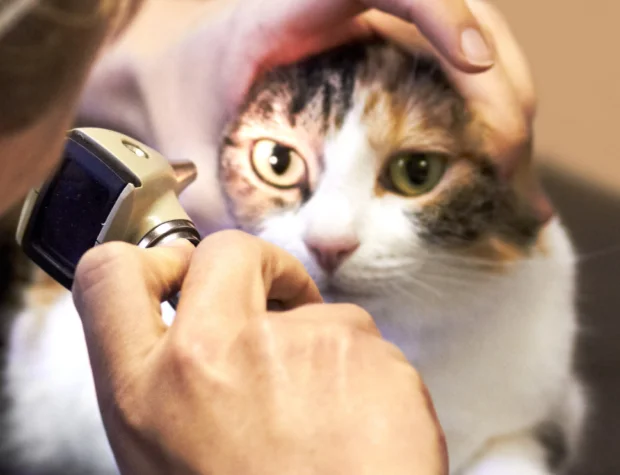
Eye changes should be evaluated promptly because some conditions can worsen without treatment. Contact your veterinary team if your pet shows signs of an eye problem, including:
- Squinting or keeping an eye closed
- Redness or swelling around the eye
- Discharge or excessive tearing
- Cloudiness or changes in eye appearance
- Rubbing the eye or face frequently
- Sensitivity to light
- Sudden changes in vision or behavior
A thorough examination can help identify the cause and determine the next steps for your pet’s care.
What to Expect Before Ophthalmic Surgery
Before surgery is recommended, the veterinarian will examine your pet and review their medical history. Additional testing may be needed to better understand the condition and plan treatment.
During your consultation, your veterinary team will explain the recommended procedure, discuss preparation instructions, and answer questions about recovery, medications, and follow-up care. Every pet’s treatment plan is based on their specific diagnosis and overall health. Understanding the process helps you feel prepared before your pet’s procedure.
Recovery After Eye Surgery
After ophthalmic surgery, your pet may need additional care and monitoring during the healing process. Recovery instructions may vary depending on the procedure and your pet’s condition.
Important recovery steps may include:
- Giving prescribed medications as directed
- Preventing rubbing or scratching near the eye
- Monitoring changes in eye appearance or comfort
- Following activity restrictions when recommended
- Attending follow-up appointments
Contact your veterinary team if you notice increased redness, swelling, discharge, discomfort, or other concerning changes after surgery.
Schedule an Eye Care Visit for Your Pet
Lovejoy Veterinary Hospital & Urgent Care provides veterinary care for pets in Boston’s North End and surrounding neighborhoods, including the West End, Bulfinch Triangle, and Charlestown. Whether your pet needs an evaluation for an eye concern or a discussion about possible surgical treatment, our team is here to help you understand the available care options.
Book an appointment with Lovejoy Veterinary Hospital & Urgent Care to discuss your pet’s eye health and determine the appropriate next step for their care.