
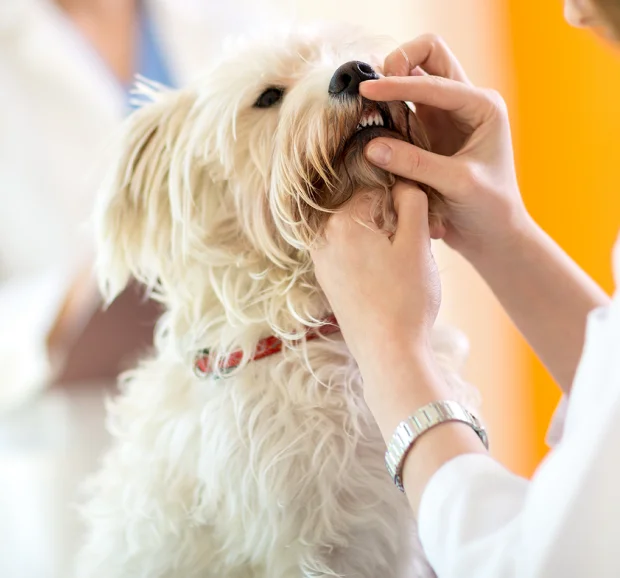
When Removing a Tooth Can Protect Your Pet’s Health
A damaged or diseased tooth can cause significant discomfort and affect your pet’s ability to eat and enjoy daily activities. Some dental problems can also affect the tissues and bone surrounding the tooth.
At Lovejoy Veterinary Hospital & Urgent Care, we perform dental extractions for dogs and cats when a tooth cannot be effectively preserved. Our team uses dental imaging, general anesthesia, pain management, and careful monitoring to support your pet throughout the procedure.
The goal is to address the source of dental disease while keeping your pet as comfortable as possible.

When Does a Pet Need a Tooth Extraction
Extraction may be recommended when a tooth is severely damaged, diseased, or unlikely to remain healthy with other treatment. Common situations include:
- Advanced periodontal disease causing significant tooth mobility
- Fractured teeth with exposed pulp
- Tooth root infection or an abscess
- Painful tooth resorption in cats
- Retained baby teeth that interfere with adult teeth
- Teeth that are damaged beyond repair
The veterinarian will examine the affected tooth and surrounding structures before determining whether extraction is appropriate.
Evaluating the Tooth Before Extraction
Dental X-rays provide information about structures below the gumline that cannot be evaluated through a visual examination alone. They can show the tooth roots, surrounding bone, retained roots, and other abnormalities.
Your veterinarian may use digital dental radiographs before and after extraction to better understand the affected tooth and confirm that the relevant structures have been appropriately addressed.
Keeping Your Pet Comfortable During the Procedure
Dental extractions are performed under general anesthesia so your pet remains unconscious and does not experience the procedure. Your veterinary team monitors your pet throughout anesthesia and provides appropriate pain management.
Local anesthetic blocks may also be used to help control pain during and after the procedure. Before treatment, the veterinarian will discuss the recommended extractions, expected care, and other relevant details with you.
What Recovery Looks Like After an Extraction
Your pet’s recovery will depend on the number of teeth removed and the complexity of the procedure. The veterinarian will provide instructions for feeding, activity, medications, and oral care during the healing period.
Soft food may be recommended temporarily, particularly when extraction sites need additional protection. Pain medication may also be prescribed based on your pet’s procedure and individual needs. Antibiotics are not necessary after every dental extraction. The veterinarian will determine whether they are appropriate based on infection and other clinical findings.
Contact your veterinary team if you notice significant swelling, bleeding, worsening discomfort, difficulty eating, or other concerning changes during recovery.
Most dogs and cats can adapt well after dental extractions. Removing a painful or diseased tooth can allow your pet to return to more comfortable eating and normal daily activities.
Address Your Pet’s Dental Pain
Lovejoy Veterinary Hospital & Urgent Care provides dental extractions for dogs and cats in Boston’s North End and surrounding neighborhoods, including the West End, Bulfinch Triangle, and Charlestown.
For pet owners near Lovejoy Wharf and North Station, our team can evaluate signs of dental disease and determine whether your pet may benefit from professional dental treatment or extraction.
Schedule a dental evaluation with Lovejoy Veterinary Hospital & Urgent Care if your pet has difficulty eating, bad breath, loose teeth, facial swelling, or other signs of oral discomfort.